- Home
- Blogs
- About
- Services
- Group Companies
- Contact Us
- सुचना *

-
Call Us On:
+977 1 5320150, 5320160 -
Send us a Mail:
info@cargonepal.com.np -
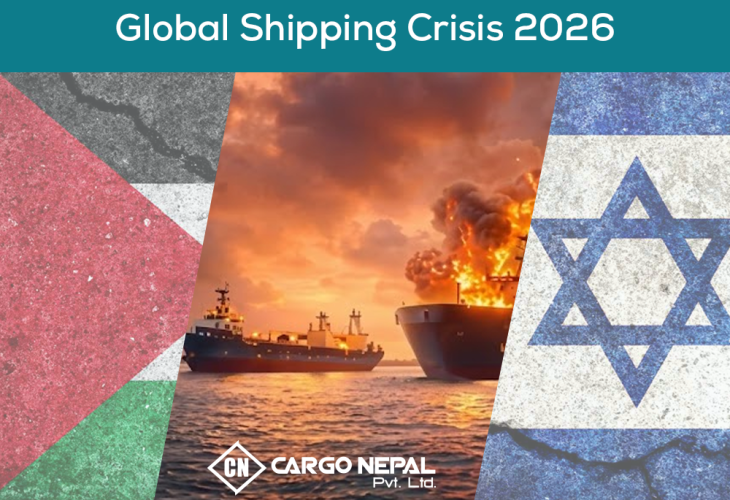
The 2026 Global Shipping Crisis: Navigating Middle East Disruptions and Rising Logistics Costs
By Cargo Nepal Pvt. Ltd. (Global Logistics Strategy Team)
As of March 2026, the global logistics landscape is facing its most significant challenge since the pandemic era. The sudden escalation of conflict in the Middle East—marked by the strategic closure of the Strait of Hormuz and the disruption of key maritime routes—has sent shockwaves through the international trade community. For businesses in Nepal, an import-dependent landlocked nation, these geopolitical tremors translate directly into higher freight rates, extended lead times, and a volatile fuel market.
At Cargo Nepal Pvt. Ltd., we believe that transparency is the first step toward resilience. This comprehensive guide outlines the current state of the 2026 shipping crisis and provides actionable, protective measures your business can take to minimize disruption to your supply chain.
1. The Geopolitical Catalyst: Why Logistics Costs Are Surging
The primary driver of the current crisis is the functional impairment of the Strait of Hormuz following the military escalations that began in late February 2026. As one of the world’s most critical maritime "chokepoints," the Strait handles approximately 20% of the world’s liquefied natural gas (LNG) and oil consumption.
The Rerouting Reality: The Cape of Good Hope Detour
With the Persian Gulf and Red Sea routes effectively high-risk zones, major shipping lines—including Maersk, Hapag-Lloyd, and COSCO—have been forced to reroute vessels around the Cape of Good Hope in Africa.
• The Impact on Time: This detour adds approximately 3,500 nautical miles and between 15 to 20 days to the standard transit time from Europe and the US to Asian ports.
• The Impact on Cost: Rerouting a single large container vessel adds upwards of $1 million in extra fuel costs per voyage. These costs are being passed down the supply chain in the form of "Emergency Conflict Surcharges" (ECS) and "War Risk Surcharges" (WRS).
2. The Fuel Factor: $100+ Oil and Its Ripple Effects
Fuel is the lifeblood of logistics, and its price is currently in a state of extreme volatility. Following the strikes in early March, Brent crude oil prices surged past the $120-per-barrel mark before stabilizing around $100.
Understanding Surcharges in 2026
Freight carriers are implementing a variety of emergency levies to protect their operating margins. As an importer, you are likely to see the following on your invoices:
1. Emergency Fuel Surcharge (EFS): A floating fee tied to the daily price of Brent crude.
2. War Risk Surcharge (WRS): Applied to shipments entering or transiting near the conflict zones.
3. Peak Season Surcharge (PSS): Triggered by the sudden surge in demand for alternative routes.
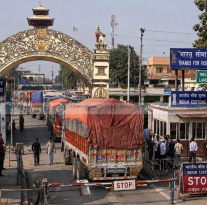
For the Nepalese market, these increases are particularly sharp. Local transport costs are rising as diesel prices follow the global trend, affecting everything from border haulage at Birgunj to the last-mile delivery in Kathmandu.
3. The Impact on Nepal: Inflation and Supply Shortages
The crisis is not just a "global" problem; it is a local economic reality. Economists in Nepal warn that for every 10% increase in global oil prices, Nepal’s national inflation rate rises by approximately 0.4 percentage points.
Current Market Conditions in Nepal
• NOC Interventions: To prevent hoarding, the Nepal Oil Corporation (NOC) has recently implemented measures such as supplying half-filled cooking gas cylinders to ensure equitable distribution. NOC has also decided to raise the price of Petrol and Diesel which will directly affect the Transportation Cost with in the country.
• Air Freight Spikes: As sea freight becomes unreliable, many businesses have shifted to air freight. This has caused air cargo rates to spike by as much as 400% on certain high-demand lanes as capacity out of Gulf hubs vanishes.
• Remittance Concerns: With nearly 40% of the Nepali migrant workforce based in the Middle East, any prolonged conflict threatens the steady flow of remittances, which could further weaken the national purchasing power.
4. Protective Measures: How to Minimize Your Business Disruption
While you cannot control global geopolitics, you can control your supply chain’s response. Here are the five strategies we recommend for 2026:
A. Diversify Your Transport Modes (The "Sea-Air" Hybrid)
When sea freight is too slow and air freight is too expensive, consider a multimodal approach. Cargo Nepal can help you ship goods via ocean to alternative hubs like Jeddah or Salalah, and then fly them the remaining distance to Kathmandu. This "Sea-Air" model offers a middle ground in both cost and speed.
B. Increase Your Buffer Stock (Safety Inventory)
The "Just-in-Time" delivery model is high-risk in a conflict environment. We advise our clients to increase their safety stock levels by 25% to 30%. Moving from a 30-day to a 60-day inventory cycle ensures that your sales aren't halted if a vessel is delayed by the detour.
C. Audit Your Contracts for "Force Majeure"
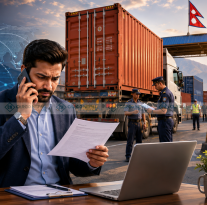
Review your agreements with suppliers and carriers. Many 2026 contracts now include specific "Geopolitical Instability" clauses. Understanding who bears the cost of insurance spikes and demurrage (storage) fees at congested alternative ports is vital for your financial planning.
D. Advance Booking and Rate Locking
The volatility of the current market means that a quote today may not be valid tomorrow. Whenever possible, book your shipments 4 to 6 weeks in advance and negotiate "Rate Locks" with your freight forwarder to protect against sudden surcharge spikes.
E. Leverage Local Expertise
Navigating border congestion and customs during a crisis requires a team that has physical boots on the ground. A licensed customs agent can help you find alternative clearance points (such as Bhairahawa vs. Birgunj) to avoid bottlenecks caused by diverted cargo flows.
Cargo Nepal: Your Partner in Global Resilience
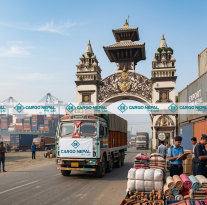
At Cargo Nepal, we aren't just moving your goods; we are protecting your business interest in a volatile world. Our team of veterans from the airline and shipping industries is working around the clock to find the most efficient routes for the Nepalese market.
• Conflict Navigation: Experts in rerouting shipments to avoid impacted Gulf corridors.
• Licensed Authority: Led by Licensed Customs Agent Mr. Yam Pd. Rijal (License No. 863/079/080).
• ISO 9001:2015 Certified: Ensuring standardized processes even during global crises.
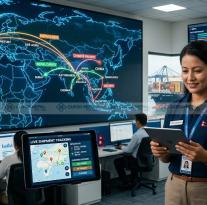
• Real-time Updates: Transparent communication regarding fuel surcharges and route changes.
Service Capabilities Air Freight Service (Priority Capacity), Ocean Freight Cross Border Haulage & Trucking, Sea-Air Multimodal Solutions, Warehouse Management for Safety Stock, and Project Shipment handling.
Compliance & Reliability International trade hub alliances, Comprehensive war-risk insurance coordination, Expert team from freight forwarding and shipping, Secure handling of high-value goods, 24/7 client support during transit delays.
Contact Us for a Crisis Resilience Consultation: +977-1-5320150, +977-1-5320160