- Home
- Blogs
- About
- Services
- Group Companies
- Contact Us
- सुचना *

-
Call Us On:
+977 1 5320150, 5320160 -
Send us a Mail:
info@cargonepal.com.np -
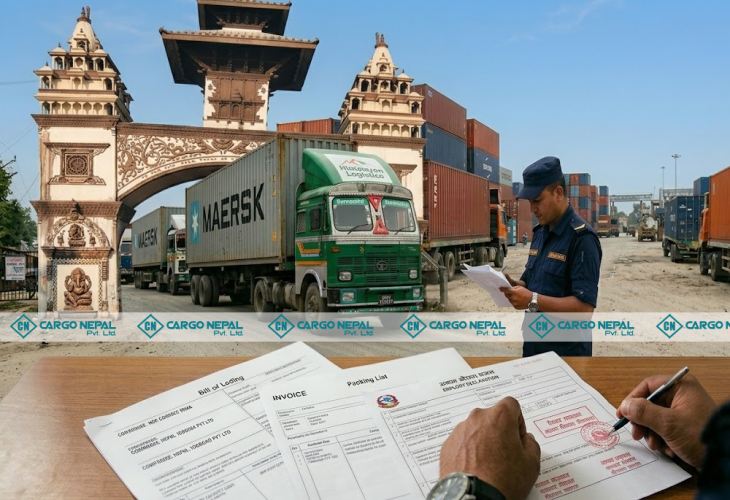
Step-by-Step Guide to Importing Commercial Goods to Nepal
If you're thinking about bringing commercial goods into Nepal whether it's electronics, garments, machinery, or raw materials the process can feel overwhelming at first. I’ve been there myself, and honestly, the paperwork alone is enough to make anyone nervous. But once you understand the steps, it’s not as scary as it looks.
In this guide, I’ll walk you through the entire import process in Nepal, from getting your first documents ready to clearing customs and delivering your goods. No unnecessary jargon. Just real, usable information.
Why Importing to Nepal Is a Growing Opportunity?
Nepal is a landlocked country, which means importing goods is a big part of its economy. From consumer products to industrial equipment, almost everything that doesn’t grow or get manufactured locally has to come from abroad mostly from China, India, and other Asian markets.
The government has been slowly improving customs systems, and online processes are becoming more common. Still, you need to be careful. One missed document can delay your shipment for weeks.
Step 1: Check If You Need an Import License
Before you even think about shipping anything, ask yourself this: Do I have permission to import commercial goods?
In Nepal, importing goods for business purposes isn’t something just anyone can do. You’ll need to register your company first.
Here’s what you typically need:
· A Company Registration Certificate from the Office of the Company Registrar
· A PAN (Permanent Account Number) from the Inland Revenue Department
· A VAT registration if your annual turnover is expected to exceed NPR 5 million
An Import Export Code this is often included in your PAN certificate nowadays, but double-check with the Department of Customs. Without these, customs won’t even let you file an entry. So get your paperwork in order first.
Step 2: Know Which Goods You Can and Cannot Import
Nepal has restrictions on certain products. You can’t just bring anything.
Prohibited items (you can’t import at all):
· Narcotic drugs (except for medical purposes with special permission)
· Pornographic materials
· Counterfeit currency
· Certain wildlife products under CITES
· Restricted items (need special approval):
· Firearms and ammunition
· Pharmaceuticals
· Agricultural products like seeds or live plants
· Wireless communication devices (walkie-talkies, some radios)
If you’re importing restricted goods, you’ll need a No Objection Certificate (NOC) from the relevant government body for example, the Department of Drug Administration for medicines, or the Nepal Telecommunications Authority for communication equipment. It’s always smart to check the latest Customs Tariff book or talk to a customs agent before you ship anything.
Step 3: Find a Reliable Customs Agent (Clearing Agent)
Here’s a piece of advice I wish someone had given me earlier: don’t do this alone.
Hiring a licensed customs clearing agent in Nepal is not an extra expense it’s a lifesaver. These agents know the forms, the officers, and the little tricks that make the process faster.
They will help you with:
Preparing customs declarations
· Calculating duties and taxes
· Communicating with customs officers
· Physically clearing your goods from the port or airport
A good agent charges between NPR 5,000 to 15,000 depending on the shipment size. Trust me, it’s worth every rupee.
Step 4: Prepare Your Shipping Documents
This is where most delays happen. Missing or incorrect documents can stop your shipment right at the border. Here are the documents you will almost always need:
Bill of Lading (for sea freight) or Airway Bill (for air freight)
This is proof that your goods have been shipped. It includes details like shipper name, consignee name, port of loading, and description of goods.
Commercial Invoice
This is not a “bill” in the shopping sense. It’s a detailed document from your supplier showing:
What the goods are
· Quantity
· Unit price
· Total value
· Country of origin
· Terms of delivery (Incoterms like FOB, CIF, etc.)
Customs officers in Nepal will check this very carefully. If the value looks suspiciously low, they may ask for bank transfer proofs or supplier invoices.
Packing List
A simple list showing how the goods are packed how many cartons, weight per carton, dimensions, etc. This helps customs officers physically verify your shipment.
Certificate of Origin
This tells customs where the goods were manufactured. Nepal has trade agreements with India and some other countries that offer lower duties. For example, goods made in India may qualify for reduced rates under the South Asia Free Trade Area (SAFTA).
Insurance Certificate (optional but recommended)
Not always required, but if your goods are damaged in transit, you’ll regret not having it.
Step 5: Understand How Customs Value Your Goods
Customs in Nepal doesn’t just trust the invoice you provide. They follow something called the Customs Valuation Rules, which are based on international WTO guidelines.
Usually, they will compare your declared value with:
· Transaction value of identical or similar goods
· Price databases they maintain
· Prices from other importers
If your declared value is much lower than what they expect, they can raise it and charge duty on the higher amount. This is called “loading” the value. And once they do that, it’s very hard to reverse. So always be honest. Declare the actual price you paid, including any commissions or royalties.
Step 6: Calculate Customs Duty, Excise, and VAT
This is the part that confuses most people. Let me break it down simply.
When you import commercial goods to Nepal, you pay three main types of taxes:
1. Customs Duty
This depends on the product. You’ll find the rate in the Customs Tariff Schedule, which lists every product under an HS Code (Harmonized System code).
For example:
· Raw materials: 0% to 10%
· Semi-processed goods: 10% to 20%
· Finished consumer goods: 20% to 80% or even more for luxury items
2. Excise Duty
This applies mainly to specific products like alcohol, tobacco, soft drinks, air conditioners, and high-end electronics. Many regular commercial goods don’t have excise duty.
3. VAT (Value Added Tax)
Almost all imports are subject to 13% VAT. It’s calculated on:
CIF Value + Customs Duty + Excise Duty (if any)
So if your goods are worth NPR 1,000,000 CIF and customs duty is 100,000, VAT is 13% of NPR 1,100,000 = NPR 143,000.
There are a few VAT-exempt items like some agricultural inputs and educational materials, but they’re rare.
4. Other Small Fees
· Local Development Fee: often 1.5% to 2% of the customs duty
· Agriculture Reform Fee: for certain food products
· Road Maintenance Fee: sometimes added for fuel and vehicles
Your customs agent will calculate all this for you, but it’s good to understand the basics so you’re not surprised.
Step 7: File Your Customs Declaration (ASYCUDA System)
Nepal uses a computerized system called ASYCUDA (Automated System for Customs Data). Your clearing agent will log into this system and file a customs declaration called a Bill of Entry.
You’ll need to provide:
· All the documents mentioned above
· Your importer code (PAN)
· Supplier details
· HS code of each product
Once filed, the system assigns a risk category: Green (low risk, quick clearance), Yellow (document check), or Red (physical inspection).
Step 8: Physical Inspection and Clearance
If your shipment is selected for Red channel, customs officers will open your containers and check the goods against your documents.
They’ll look for:
· Mismatched quantity
· Wrong product description
· Under-valuation
· Prohibited items
If everything matches, they’ll approve the release. If not, you may face penalties, fines, or even seizure of goods. In minor cases, they may simply ask you to pay extra duty.
This step takes anywhere from a few hours to a few days. Having a good agent can speed things up.
Step 9: Pay the Duties and Take Delivery
Once your Bill of Entry is approved, you’ll receive a tax invoice. You can pay online through the customs portal or at designated banks inside the customs yard.
After payment, you get a release order. Take this to the warehouse or port operator, and they’ll hand over your goods. Then you’re free to transport them to your warehouse or shop.
Step 10: Post-Import Compliance
Your job isn’t fully done after you take the goods out.
You need to:
· Keep all import documents for at least 5 years (tax officers can audit you)
· Maintain proper stock records
· Pay any additional taxes if customs later revises your valuation
Also, if you’re selling the goods locally, remember that you must issue VAT bills to your customers if you’re VAT-registered.
Final Thoughts
Importing commercial goods to Nepal is not impossible. Thousands of businesses do it every day. But it requires patience, attention to detail, and a willingness to follow rules. Start small if you’re new. Work with experienced partners. And never try to “save money” by undervaluing your goods or skipping a customs agent. That almost always backfires. If you’re still unsure, visit the Department of Customs in Kathmandu or talk to a trade consultant. A few thousand rupees spent on advice now can save you lakhs later.
Why Choose Cargo Nepal Pvt. Ltd.?
You have options. There are other clearing agents in Kantipath, New Road, and Birgunj. So why us?
· Experience: We've been in this business for over a decade. Our team knows the customs regulations inside out.
· Transparency: We give you a written quote upfront. No hidden charges.
· Speed: We file documents the same day your goods arrive. No delays.
· Nationwide reach: We deliver to every major city like Pokhara, Biratnagar, Nepalgunj, Dharan, Butwal.
· Local presence: Our office is at Kantipath, right in the heart of Kathmandu. You can walk in anytime and talk to a real person.
Ready to Start Your Import Journey?
Importing commercial goods to Nepal doesn't have to be stressful. With the right partner, it's just a process step by step, document by document. At Cargo Nepal Pvt. Ltd., Kantipath, we've helped hundreds of businesses bring in everything from mobile phones to heavy machinery. We know the shortcuts. We know the pitfalls. And we're here to make your life easier.
FAQs (Quick Answers)
Q: How long does import clearance take in Nepal?
A: For Green channel, 1-2 days. For Red channel, 3-7 days on average.
Q: Can I import without a customs agent?
A: Legally yes, but practically no. The system is too complex for beginners.
Q: What is the penalty for wrong declaration?
A: 100% to 300% of the evaded duty, plus possible criminal charges.
Q: Do I need an LC (Letter of Credit)?
A: Not mandatory for small shipments, but banks and customs prefer it for large commercial imports.